How to Travel With Vape Batteries on an Airplane
Part of Batteries, charging and disposal
Vape devices and their batteries are subject to specific airline rules in Canada. Most problems at the airport come from one source: a battery packed in the wrong place or with its metal contact points exposed. This guide explains why the rules exist, how to fix a packing mistake before or at security, and how to prevent the issue on future trips.
Why it happens
Most vape batteries are lithium-ion cells, a battery chemistry that stores a large amount of energy in a small, lightweight package. If a lithium-ion cell is damaged, crushed, or shorted, it can overheat and catch fire. A short circuit happens when the positive and negative contact points touch metal such as keys, coins, or another battery, and the stored energy discharges all at once as heat.
Because of this risk, Transport Canada and airlines treat loose lithium batteries as dangerous goods. The main rule is that every vape device and every spare battery must travel in carry-on baggage, never in a checked bag. That includes sealed pod and disposable devices with built-in cells, not only loose batteries. Checked bags ride in the cargo hold, where a fire cannot be reached or put out quickly by the crew. Carry-on baggage stays in the cabin, where a problem can be spotted and handled. Screening staff and airline agents may also flag a bag if a battery's energy rating is not visible or if it looks damaged.
The energy a battery holds is measured in watt-hours, written as Wh, and it is usually printed on the battery label. A rating of 100 Wh or less is the standard allowance for vape batteries. Ratings between 100 Wh and 160 Wh generally require airline approval. Ratings above 160 Wh are not allowed on passenger flights. This rating, not the physical size of the battery, is what screening staff check.
Step-by-step fix
Follow these steps if you are preparing to fly or if a battery is questioned at screening.
- Move the battery to carry-on. If a loose or spare battery ended up in a checked bag, take it out and place it in the bag that goes with you into the cabin.
- Read the watt-hour rating. Look for the Wh number printed on the battery's label. If it is 100 Wh or less, no special approval is needed. If it is between 100 Wh and 160 Wh, contact the airline before flying to confirm approval. If it is over 160 Wh or the rating is missing, do not take it.
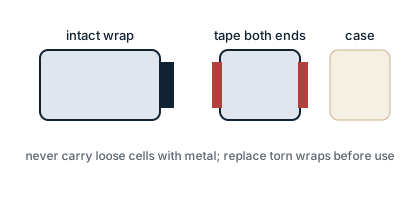
- Protect the contact points. Cover the positive and negative ends with tape, or place each spare battery in its own case or plastic bag. This prevents a short circuit when the battery moves in your bag.
- Keep batteries in the device where allowed. A battery that is installed inside a vape device and held firmly can stay in the device. Spare batteries that are loose must be packed separately and carried on.
- Turn the device off and prevent accidental activation. If the device has a fire button, ensure it cannot be pressed by other items. Some travellers remove the pod or tank so the device cannot fire on its own.
- At screening, show the label and stay calm. If an agent asks about the battery, show the printed Wh rating and confirm it is in carry-on. Answer questions plainly; the rules are the same for everyone.
- Do not fly with a damaged battery. If a battery is swollen, dented, leaking, or shows burn marks, it is not safe to carry on or check. Leave it out of your luggage and recycle it at a battery drop-off before the trip.
Prevention
Confirm the airline's rules before you pack. Canadian rules are set by Transport Canada, but individual airlines can add their own limits on how many spare batteries a passenger may carry. Check the airline's dangerous goods page and the Canadian Air Transport Security Authority website for the current wording.
Buy batteries that have the Wh rating printed clearly on the label. Unmarked cells are more likely to be refused at screening because their energy cannot be confirmed. Store batteries in cases made of plastic or other material that does not conduct electricity, not only when flying. A case keeps the contact points covered and reduces the risk of damage.
Inspect each battery before you leave. Look for swelling, dents, torn wraps, or leaking. Replace or recycle any cell that shows damage. Keep spare batteries in your carry-on at all times during the trip, and never place them in a checked bag, even on the return flight.
Charge batteries only until they are full or at the level you need, and unplug them once charging is done. Do not leave batteries charging unattended or overnight. A battery that has been treated this way is more likely to remain stable and pass inspection.
Finally, keep the number of spare batteries reasonable. Most airlines allow a limited number of spare lithium cells per passenger, and carrying more than needed invites questions at screening.
This guide is general technical information and is not medical or legal advice.